
Physics
tutoring
Science foundations from Year 9. HSC Physics from Year 11.
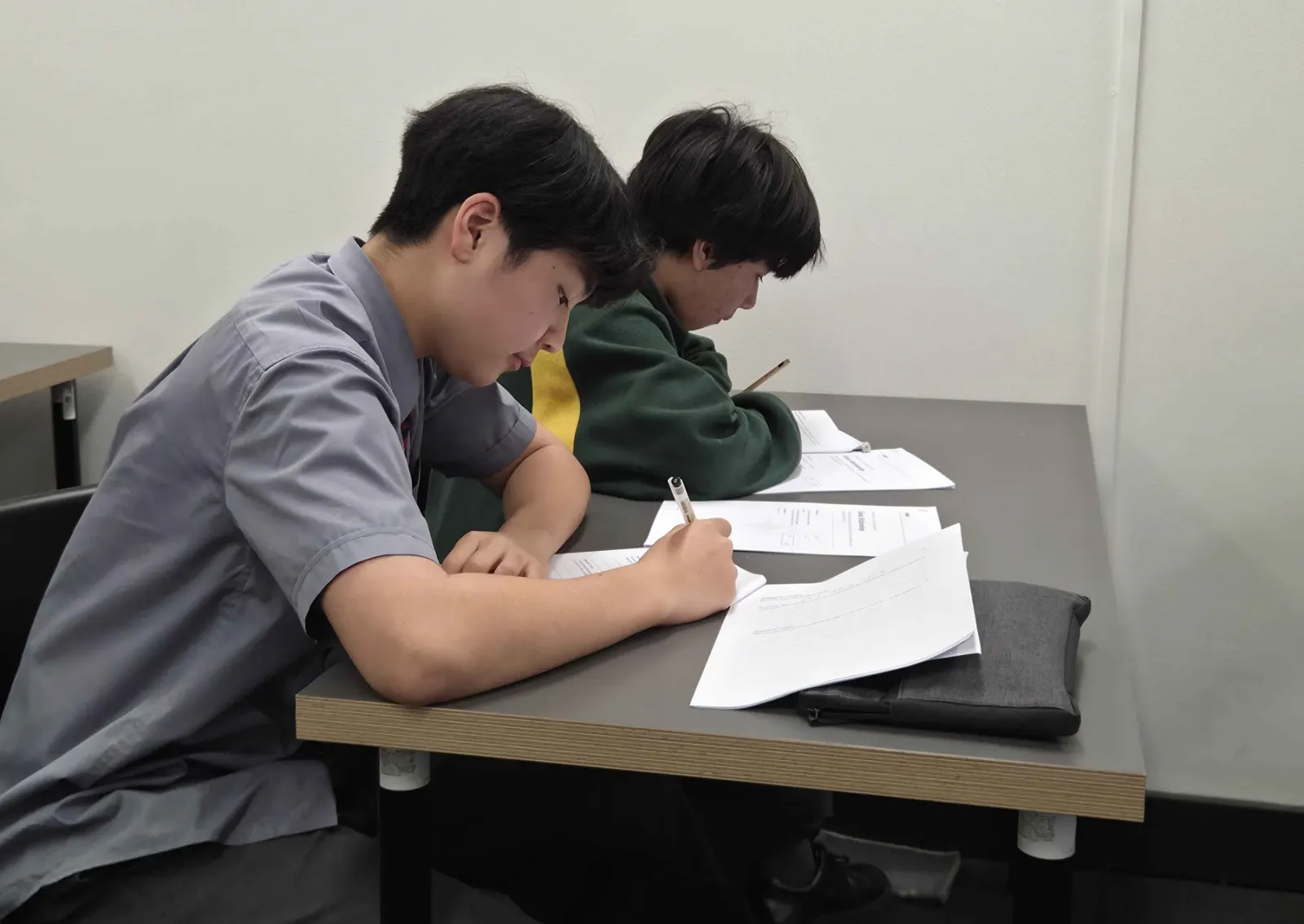
How the lessons work
We explain the concepts, work through the calculations and practise applying both to questions. Years 9–10 focus on science foundations, followed by HSC Physics from Year 11.
What we work on
- Science foundations in Years 9–10
- Using equations and interpreting graphs
- HSC Physics concepts and applications
- Exam questions and scientific explanations
What changes by year level
Years 9–10: science foundations
Build the skills needed to describe a physical situation, read a graph and use an equation with the right units. These are junior science foundations, not the full senior Physics course. Explaining what a quantity means matters as much as substituting numbers.
Year 11: connect the model to the calculation
Our motion materials distinguish scalars from vectors, distance from displacement, and speed from velocity. Our electric-circuits materials connect current, voltage and resistance through diagrams, equations and graphs. Students practise moving between these representations rather than choosing a formula from memory alone.
Year 12: HSC Physics reasoning
Apply concepts to unfamiliar situations, interpret data and construct clear scientific explanations alongside calculations. Bring your school topic list and assessment notice so we can discuss the relevant course and the areas needing attention. The sequence depends on the school and syllabus cohort.
Topics and pace depend on your child’s starting point and school course. At the free diagnostic in Epping, we discuss the next steps and confirm suitable class options.
A look inside our teaching materials
From our motion materials: distance or displacement?
The Quantities of Motion booklet separates the length of a journey from the change in position. A route can be longer than the straight-line separation between its start and finish.
- Identify the quantity: distance records the total path travelled; displacement records the change from starting position to finishing position.
- Include direction: displacement is a vector, so a size alone is not a complete description.
- Use the distinction: average speed uses distance divided by time; average velocity uses displacement divided by time. Check which quantity the question asks for before calculating.
Based on BEAM’s Year 11 Quantities of Motion materials. Junior classes build the graph, unit and equation skills needed for this work.
How feedback and practice work between lessons
Find a lesson time
Choose a year to narrow the published Physics timetable.
Published timetable snapshot, 23 October 2026. Confirm current times and availability with the team.
Your tutor
Yiwei H.
Meet the teaching teamYour first visit
Start with a free diagnostic. We’ll go through the results with you and recommend a class based on what your child needs.
Book a free diagnosticAllow 1 hour 20 minutes. It’s free, with no obligation to enrol.
A diagnostic paper 1 hour
Your child completes a paper so we can see what they understand and which topics need more work.
Discuss the results
We mark the paper and go through the topics with you, including where your child got stuck.
Choose a class
We’ll explain the class options, times and fees. You can ask questions and decide whether you’d like to enrol.