
English
tutoring
Reading, essay writing and creative writing.
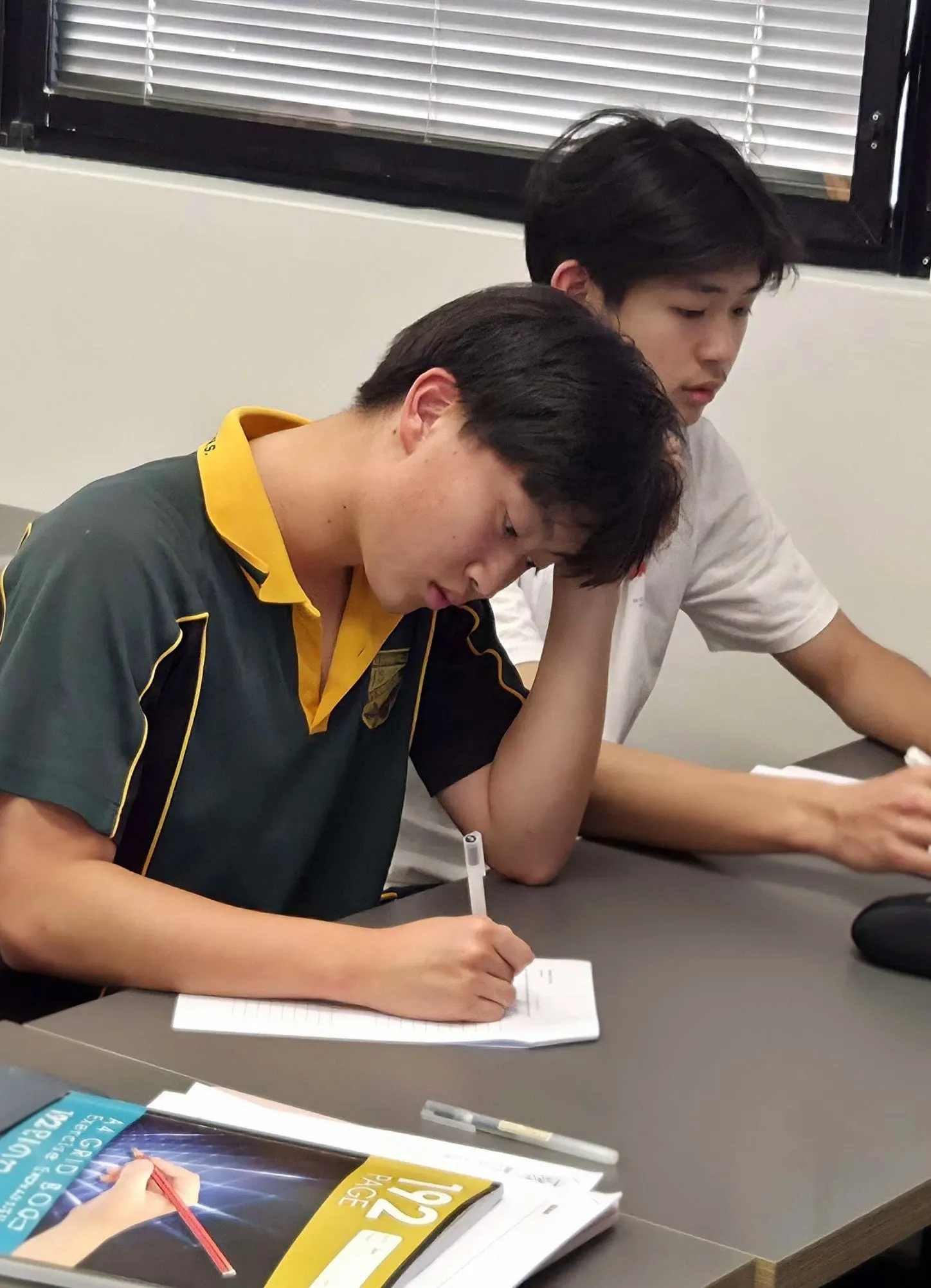
How the lessons work
We teach students how to read a text closely, explain their ideas and support them with evidence. Lessons cover analytical, creative and persuasive writing, from individual paragraphs to complete pieces.
What we work on
- Reading and interpreting texts
- Paragraph and essay structure
- Analytical and persuasive writing
- Creative writing and developing a voice
What changes by year level
Years 7–8: read closely and build a paragraph
Work on understanding what a text says, choosing relevant evidence and explaining an idea clearly. Analytical, creative and persuasive writing give students practice with different purposes, from a focused paragraph to a complete piece.
Years 9–10: develop ideas and revise deliberately
Move from identifying a language feature to explaining what it contributes. In creative writing, planning, drafting and revising are connected: students develop a scene, discuss the draft and rewrite a passage. Our Year 9 creative-writing material includes this revision step.
Year 11: English Advanced
Develop a sustained interpretation, support it with well-chosen evidence and connect language, form and context to meaning. Reading and analytical writing sit alongside creative composition and reflection. Bring your text list and assessment instructions so the team can discuss the work your school requires.
Year 12: HSC English Advanced
Focus on answering the particular question, maintaining an argument and using textual evidence precisely. Creative work also needs purposeful choices of voice, structure and language. Texts and assessment tasks differ between schools and cohorts, so confirm your course and prescribed texts when enquiring.
Topics and pace depend on your child’s starting point and school course. At the free diagnostic in Epping, we discuss the next steps and confirm suitable class options.
A look inside our teaching materials
Year 9 example: make revision specific
Our creative-writing booklet uses Kate Chopin’s short story Ripe Figs as an optional model. It moves from summarising repeated visits to a fig tree to a slower breakfast scene where dialogue reveals two different experiences of waiting.
- Notice the choice: repeated events are compressed, while the important encounter receives more detail.
- Discuss the draft: identify a moment in the student’s own story that deserves more attention. The aim is not to copy Chopin’s plot.
- Revise: rewrite one passage after discussing it with the tutor, making a deliberate choice about pace, action or dialogue.
Based on BEAM’s Year 9 Creative Writing student booklet and tutor companion. No student writing or personal information is reproduced.
How feedback and practice work between lessons
Find a lesson time
Choose a year to narrow the published English timetable.
Published timetable snapshot, 23 October 2026. Confirm current times and availability with the team.
Your tutor
Chris Kim
Meet the teaching teamYour first visit
Start with a free diagnostic. We’ll go through the results with you and recommend a class based on what your child needs.
Book a free diagnosticAllow 1 hour 20 minutes. It’s free, with no obligation to enrol.
A diagnostic paper 1 hour
Your child completes a paper so we can see what they understand and which topics need more work.
Discuss the results
We mark the paper and go through the topics with you, including where your child got stuck.
Choose a class
We’ll explain the class options, times and fees. You can ask questions and decide whether you’d like to enrol.