
Chemistry
tutoring
Science foundations from Year 9. HSC Chemistry from Year 11.
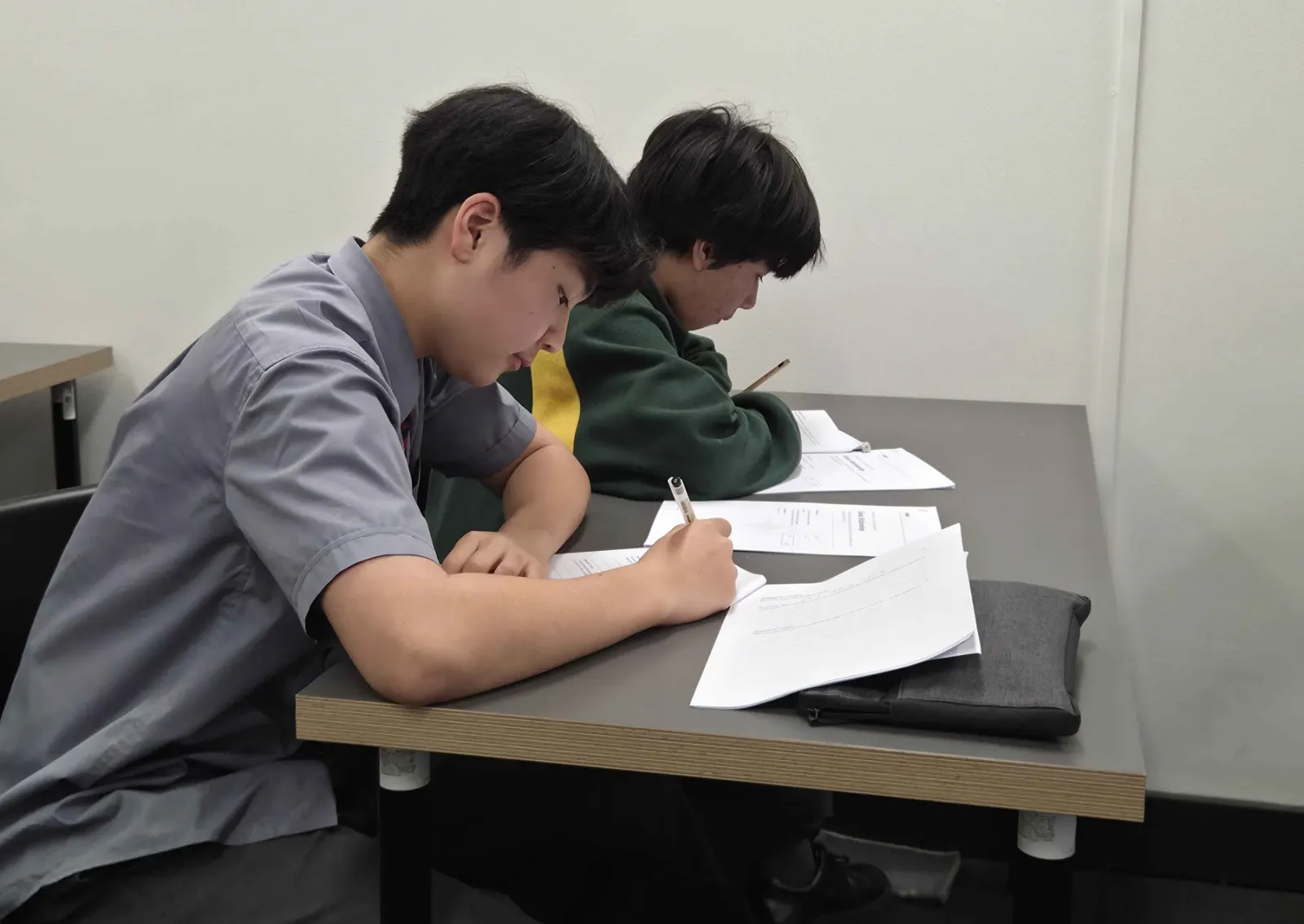
How the lessons work
We work on chemical concepts, calculations and written explanations. Years 9–10 focus on science foundations, followed by HSC Chemistry from Year 11.
What we work on
- Science foundations in Years 9–10
- Chemical concepts and scientific language
- HSC Chemistry reasoning and calculations
- Exam questions and written explanations
What changes by year level
Years 9–10: science foundations
Build confidence with chemical language, interpreting observations and showing the steps in a calculation. Junior science foundations prepare students for senior Chemistry; they are not the full HSC course. We work on connecting a written explanation to the evidence in a question.
Year 11: measurements and particle explanations
Our reaction-rate materials connect tables and graphs to collision theory. Students calculate changes over time, explain the effects of temperature, concentration and surface area, and consider which variables an investigation must control. The calculation and the chemical explanation need to agree.
Year 12: HSC Chemistry applications
Use chemical concepts to interpret data, justify a conclusion and organise a calculation with clear units and working. Written responses need to explain the chemistry behind the result. Bring your school topic list and assessment notice so we can discuss your course and the practice you need.
Topics and pace depend on your child’s starting point and school course. At the free diagnostic in Epping, we discuss the next steps and confirm suitable class options.
A look inside our teaching materials
From our reaction-rate materials: explain the changing rate
One table in our Rates of Reactions booklet records 0 mL of gas at the start, 14 mL after 10 seconds and 27 mL after 30 seconds.
- First interval: 14 ÷ 10 = 1.4 mL/s over the first 10 seconds.
- Next interval: (27 − 14) ÷ (30 − 10) = 0.65 mL/s between 10 and 30 seconds. Use the change in volume and the time within that interval.
- Explain: the lower average rate means gas is being produced more slowly. Connect that observation to the changing reactants and collision frequency, rather than simply writing that the graph gets flatter.
Adapted from BEAM’s Year 11 Rates of Reactions materials. This describes a worked data example, not a promise of laboratory sessions.
How feedback and practice work between lessons
Find a lesson time
Choose a year to narrow the published Chemistry timetable.
Published timetable snapshot, 23 October 2026. Confirm current times and availability with the team.
Your tutor
Yiwei H.
Meet the teaching teamYour first visit
Start with a free diagnostic. We’ll go through the results with you and recommend a class based on what your child needs.
Book a free diagnosticAllow 1 hour 20 minutes. It’s free, with no obligation to enrol.
A diagnostic paper 1 hour
Your child completes a paper so we can see what they understand and which topics need more work.
Discuss the results
We mark the paper and go through the topics with you, including where your child got stuck.
Choose a class
We’ll explain the class options, times and fees. You can ask questions and decide whether you’d like to enrol.